3 Key Takeaways
A story of change is an element of a report that shares a personalized case study demonstrating a project’s impact through the eyes of the individual. This simple tool can add a sense of immediacy to the reader. Results-based management approaches, such as the logic model, are often enhanced by a story of change, and it may even be required by government agencies or financial partners as part of a project’s deliverables.
Recently, the British Columbia Council for International Cooperation conducted a workshop, “Crafting a Story of Change: Learn to Effortlessly Craft Narratives of Impact,” which explored topics such as being respectful of participants who share their stories, narrowing the focus of the story, and using a set structure to guide the reader.
1: Respect those who share their experiences.
There is no story of change without speaking directly with someone affected by the project. It’s important that the interviewer approach the conversation with humility and curiosity, treating the interviewee as an equal partner.
The final story of change should be shared with the interviewee so they can understand how their words were presented and give feedback. This is especially important if stakeholders from multiple cultures are involved in the process.
2. Focus on the most important change.
The purpose of the story of change is usually to enhance a report, not to elaborate on every aspect of the project. Focusing on specifics engages the audience without overwhelming them. During the interview, ask follow-up questions to truly understand what the most important change was, even if it’s unexpected. This allows the human aspects of the story to shine.
3. Use structure to help readers understand the story of the project.
Although there is a lot of room for creativity, the story of change should also be closely structured so the audience can clearly follow the full picture of the project, including:
-
Introduction of the project.
-
A snapshot of the situation “before” the project took place.
-
An overview of the actions that were taken as part of the project.
-
The change resulting from the project and the new situation “after” the project.
-
A conclusion touching on the impact of the project and future implications.
Putting It All Together
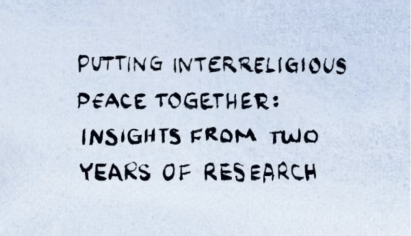
As an example of a story of change used in relation to our work, the German Institute of Area Studies (GiGA) recently released a report titled “Putting Interreligious Peace Together: Insights From Two Years of Research.” The report includes quantitative results from research we carried out in Togo and Sierra Leone, and also includes direct quotes from participants about their experiences of forging relationships and peaceful connections with those of different religions.

A story of change, because it is based on the life of real people, requires care and attention to detail to ensure it accurately reflects what happened. When done correctly, stories of change carry a profound impact, awakening the reader’s imagination as to the wider implications of the project. By using a personal story in combination with compelling qualitative and quantitative data analyses, a story of change can start conversations and discussions on what further action is necessary to complete a project’s goals.